

Salalah (صلالة in Arabic), is the capital and seat of the governor or Wali of the southern Omani province of Dhofar. The population of Salalah is 178,469 as of 2005. Salalah is the second largest town in the Sultanate of Oman and a traditional stronghold and birthplace of the Sultan, Qaboos bin Said. The Sultan traditionally lives in Salalah rather than in Muscat, the capital and largest city in Oman; Qaboos has bucked this trend, however, and he has lived in Muscat since he ascended to the throne in 1970. He does however visit Salalah fairly regularly to meet with influential tribal and local leaders; his last visit was in 2006 and before that he visited in 2002.
Visits in Salalah
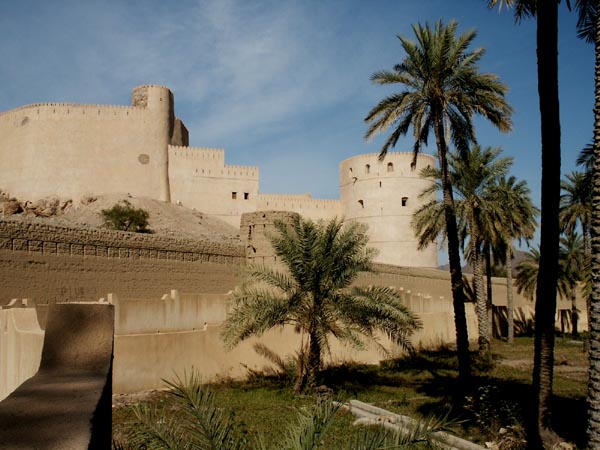
Al-Rustaq Castle
The castle nestles at the foot of Al-Jebel Al-Akhdar on the edge of the Batina plain. The castle incorporates an earlier structure which was built in the 13th century, which was itself built on the site of Persian ruins. The present structure is the result of reconstruction by the first Imam of the Al-Ya'aruba dynasty between 1624 and1649, when Ar-Rustaq was established as the capital of a united Oman. Ar-Rustaq Castle is a rectangular-shaped stronghold completely surrounded by a high curtain wall which encircles an open courtyard with an open staircase leading to the top of the castle. It boasts 4 towers, the oldest of which is an oval-shaped tower, known as the Tower of Kisra, which the Persians built in the 6th century and named after their leader Khisro Anu Sharwan. As well as a number of wells, Falaj Al-Sa'eghi is channeled through the castle to provide a supply of water. Other interesting features are rooms for living, storage, and defense, Bayadha mosque and the tomb of the late Imam, Sultan bin Seif. The castle was restored in 1986. Sohar Castle:
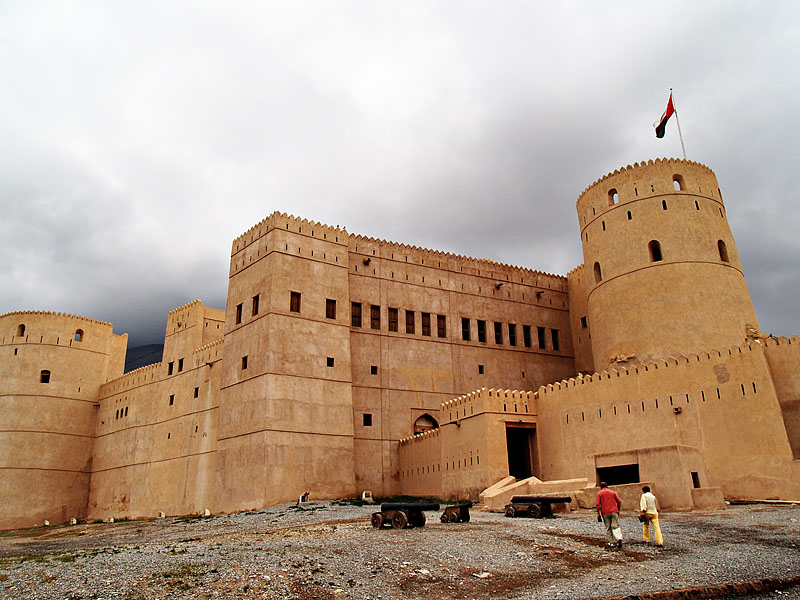
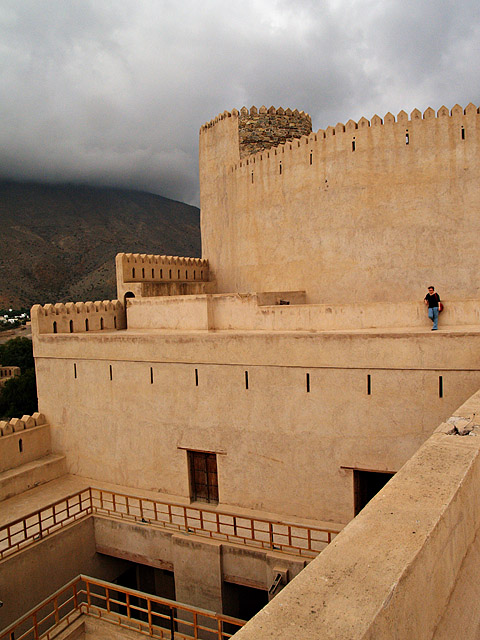
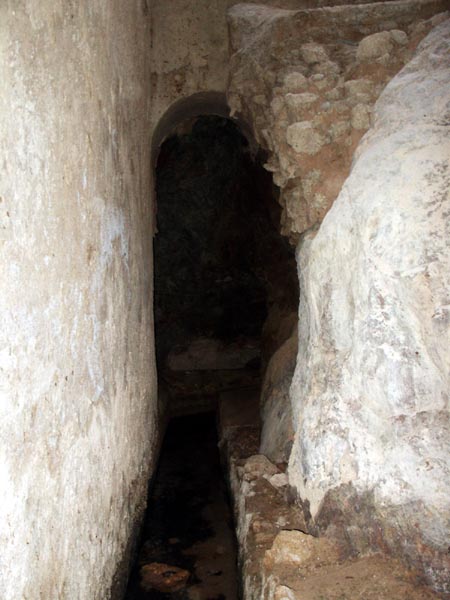
Sohar Castle
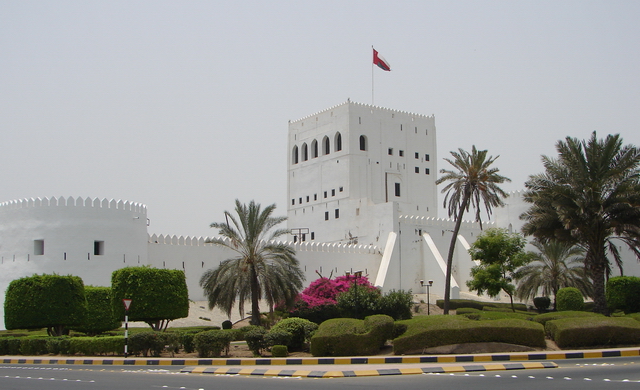
Standing proudly in the heart of Sohar city, the white castle was a vital stronghold in Al-Batinah Region, due to its location and the distinctive role it played in Omani history. Archaeological excavations in 1980 revealed that Sohar Castle was built by the Emirs of Hurmuz in the 4th century, during the reign of Bani Nabahan. The current design of the castle, constructed in 1507, resembles the blueprints of Portuguese architect De Risinda as exemplified by the presence of a surrounding wall and the still visible relics of a church at the western corner of the castle opposite what appears to be a monument with a cross at its apex. A 10 km tunnel runs westwards from inside the castle towards the Wilayat of Buraimi and was a major route for bringing in reinforcements and supplies during sieges. In 1993, the castle was converted to a museum, documenting the lively history of Sohar, its castle and its famous harbor.
Nizwa Castle
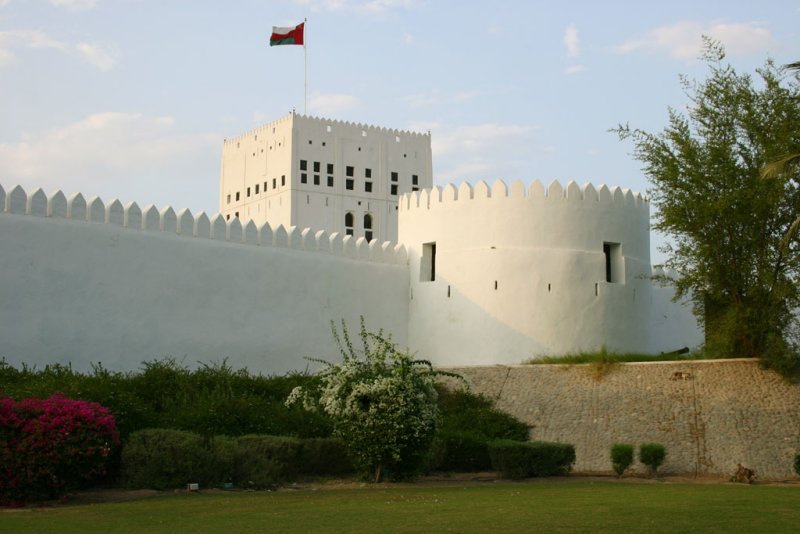
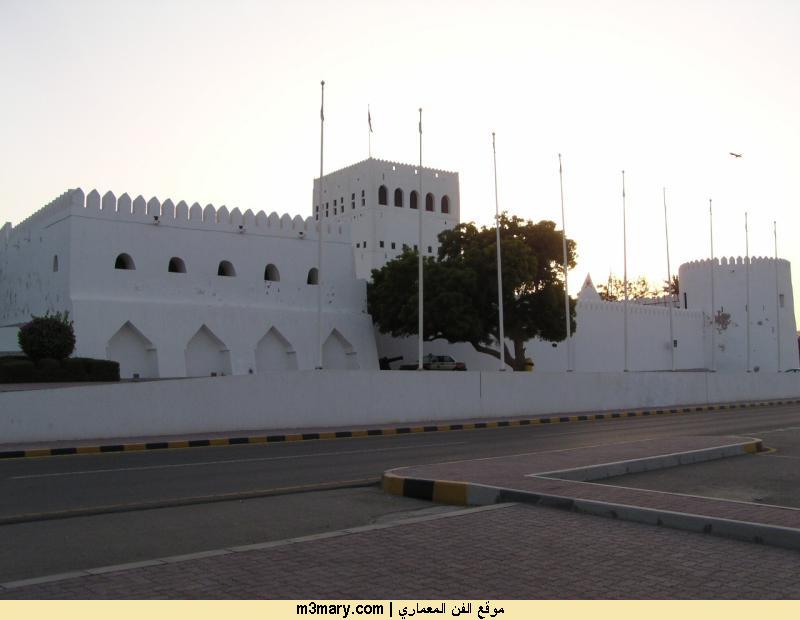
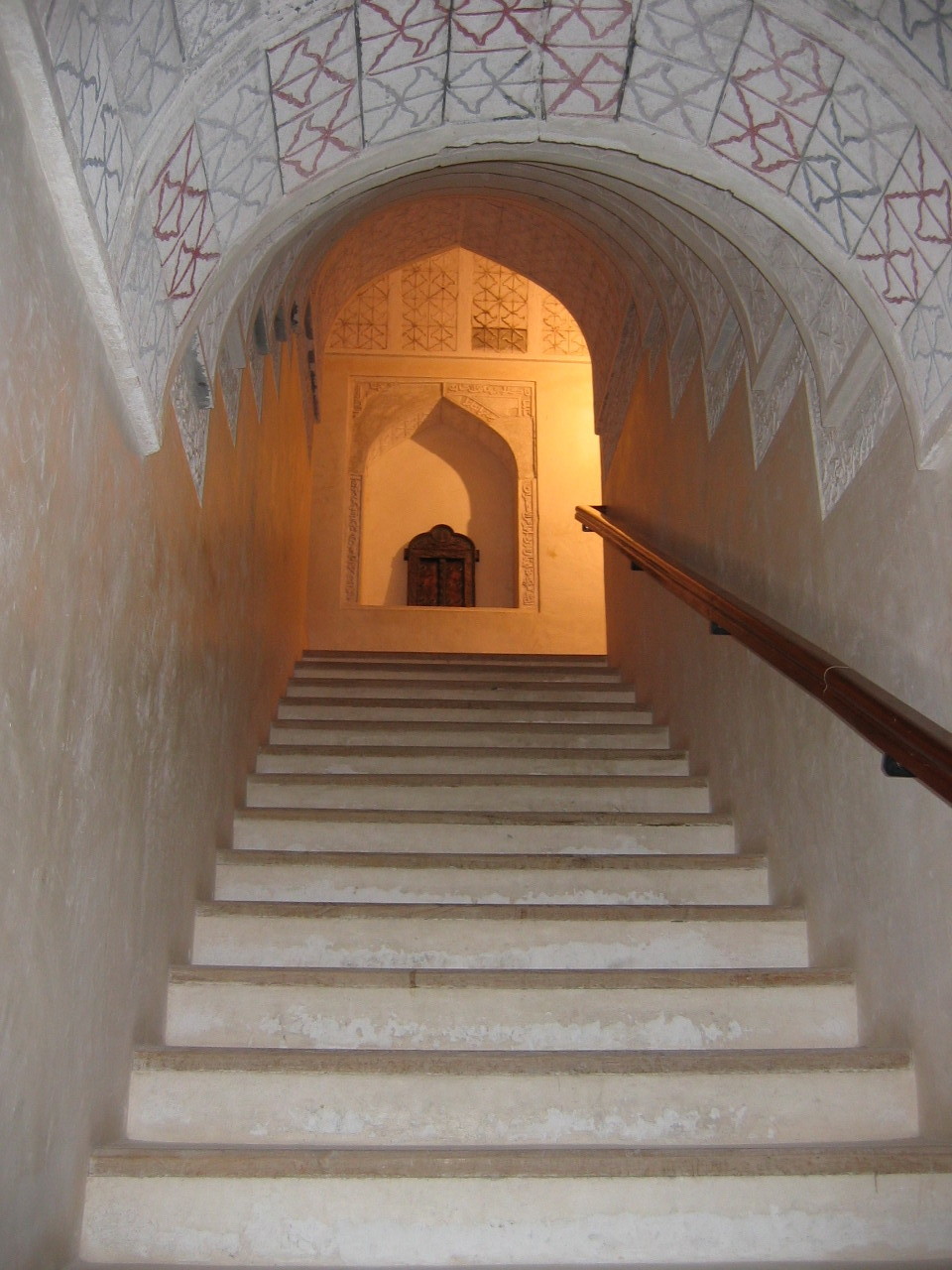
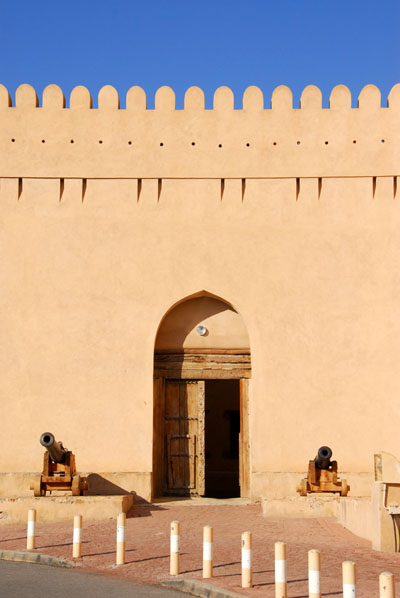
Set amid a verdant spread of date palms, the castle is a focal point for tourism in the city of Nizwa, in Ad-Dakhliyah Region. Nizwa castle stands proud at the heart of the town as a powerful reminder of its invincibility through turbulent periods of Oman’s history, being strategically located at the crossroads of caravan routes linking the Interior with the regions of Muscat and Dhofar. Nizwa was declared the capital of Oman in the 17th century during the reign of Imam Sultan Bin Seif Al-Ya'arubi, who built and used the castle as his headquarters. The design of the Castle reflects the considerable advances made in the field of military fortifications and mortar-based warfare during the era of Al-Ya'aribah. The main bulk of the citadel took about 12 years to complete and was built over a subterranean stream. The entrance of the castle opens into a veritable maze of rooms, high-ceilinged halls, doorways, narrow staircases, terraces, and corridors. The most striking feature of the castle is its central tower, complete with battlements, turrets, secret shafts, false doors and wells, which measures a colossal 150 feet in diameter and soars 115 feet above the rest of fortification. Still in position on the tower's summit are 4 cannons from an original 24, which once served as the castle's main firepower and provided complete 360-degree coverage of the countryside around.
Bahla Castle
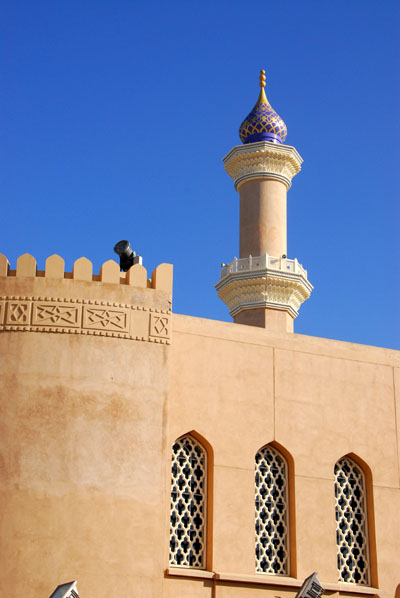
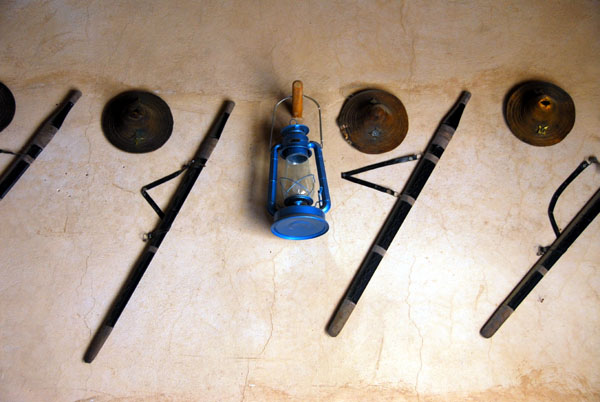
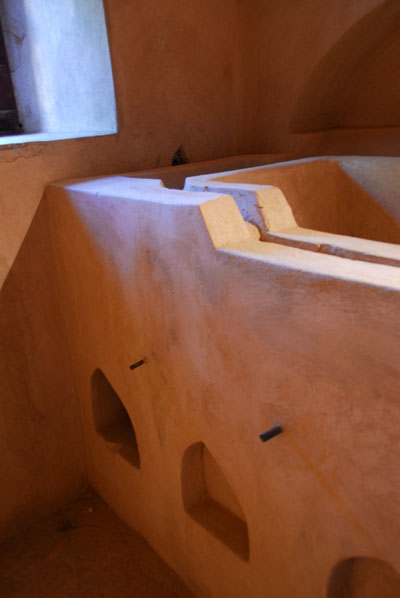
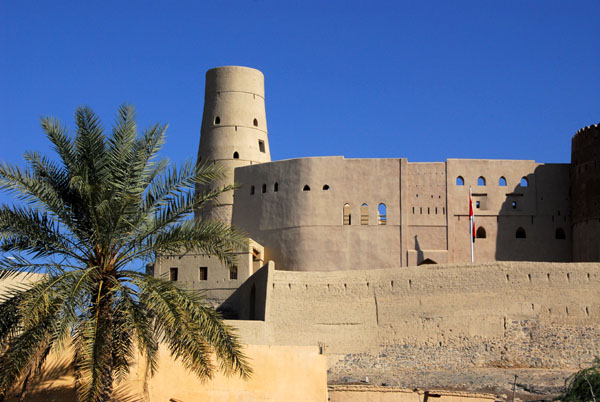
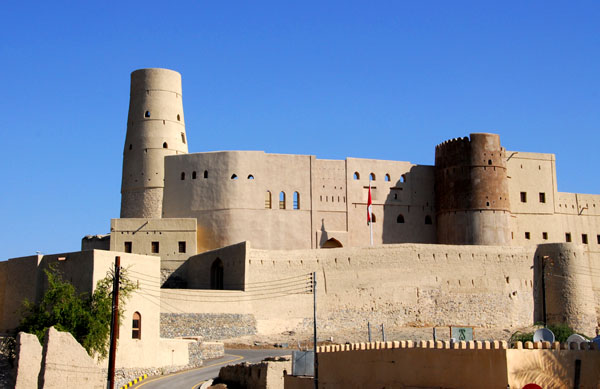
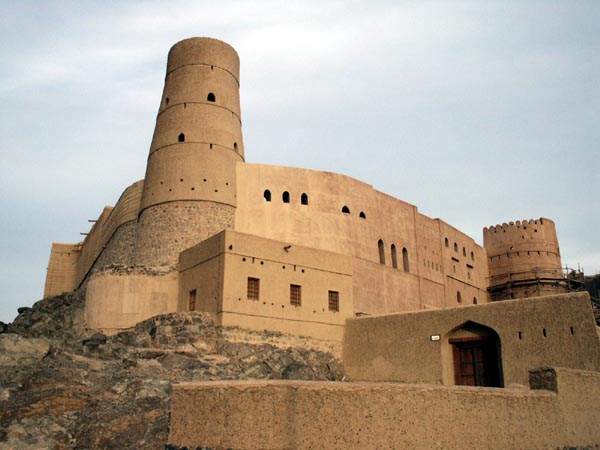
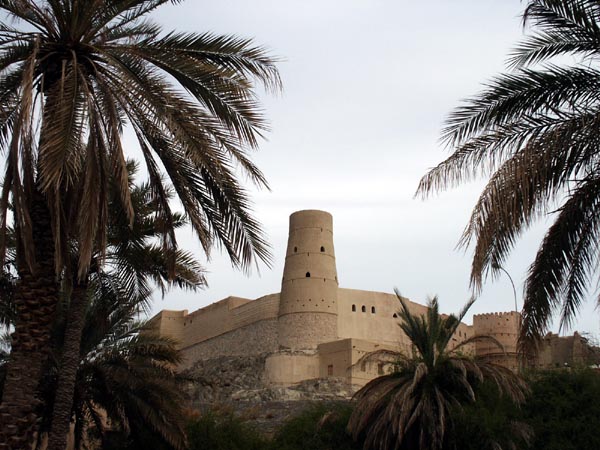
The walled triangular-shaped castle is located in Wilayat Bahla, in Ad-Dakhliyah region. Its main structures are situated on high land in the eastern corner. Some parts of the castle are thought to date back to the pre-Islamic era. The southern façade of the castle measures 112.5m, the eastern 114m and the north-western wall 135m. The considerable remains of a defensive wall can still be seen snaking their way over the hills for 7 miles, offering protection to the settlement of Bahla and its great fortress. The first fort built on this site was during the Nabhani period (830), and the second during the reign of Imam Nasser bin Murshid Al Ya'arubi (1624). The castle we see now is the result of development and renovation during the reign of Imam Azan bin Qais Al-Bu Saidi (1868). The unusual shape, ornate towers and impressive high wall, in addition to its cultural value, qualified the Castle of Bahla to be included by UNESCO on its list of World Heritage and Culture in 1988. Restoration work has recently been completed.
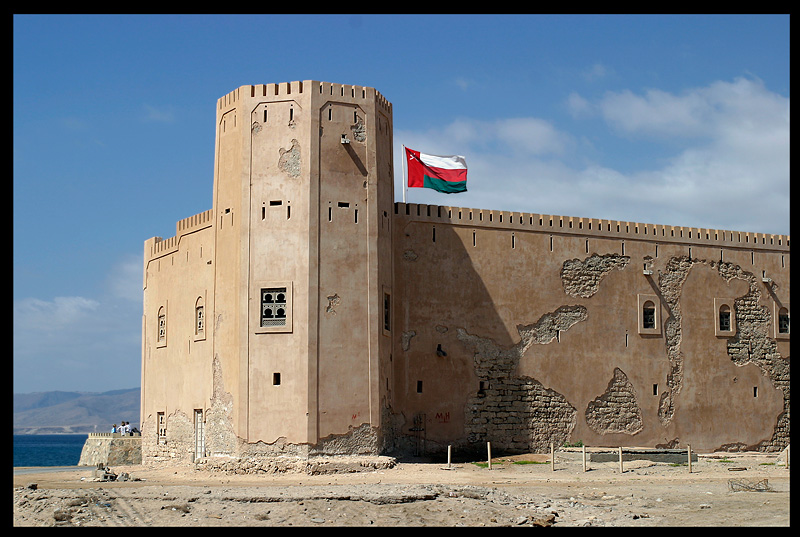
Mirbat Fort
Located in Wilayat Mirbat, in the Governorate of Dhofar, Mirbat Fort is the site of one of the last battles in the world involving conventional attack and defense from a fortress. The documented and fiercely-fought battle at Mirbat Fort was a milestone in the Dhofari insurrection of the mid 1970's. It was restored in 1991.
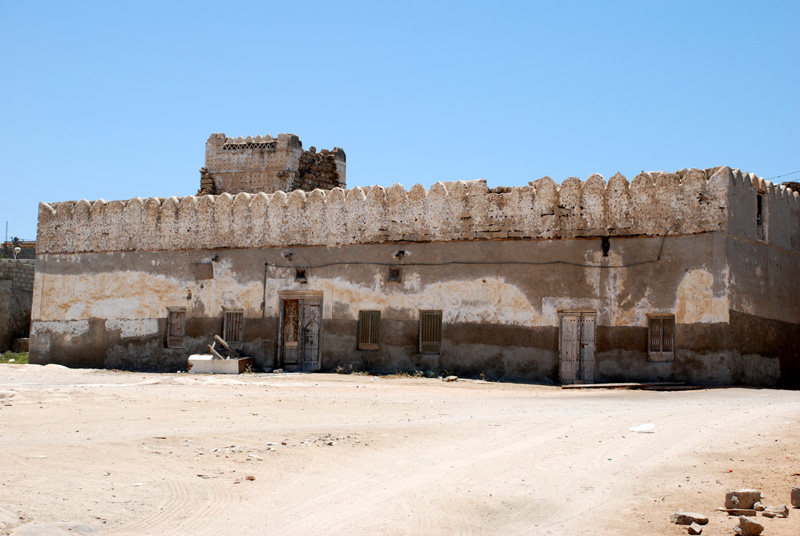
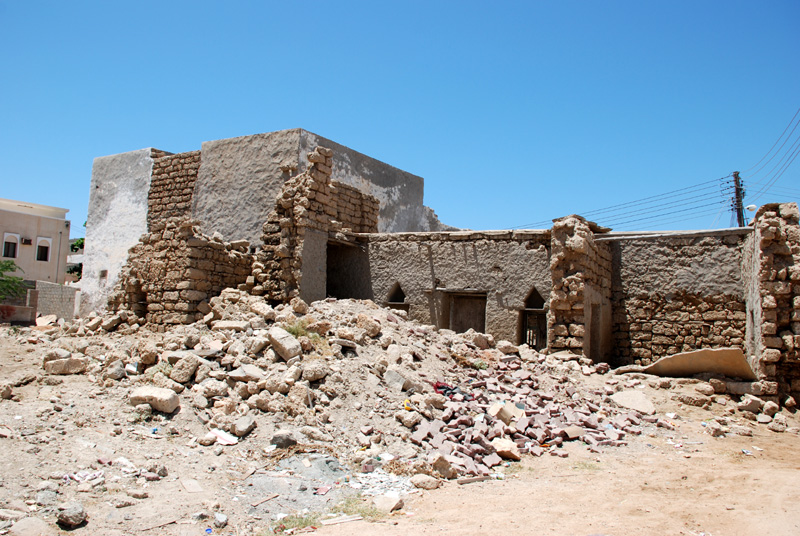
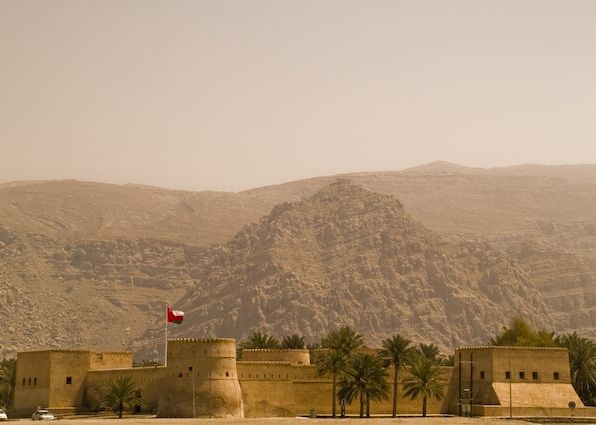
Khasab Fort
Khasab Fort is a picturesque stronghold situated on the inner cove of Khasab Bay in Wilayat Khasab, Musandam Governorate. The fort was built in the 17th century by Portuguese seeking control over regional maritime trade. Within its low crenellated walls it boasts a colossal central tower, thought to pre-date the fort itself. It was restored in 1989.
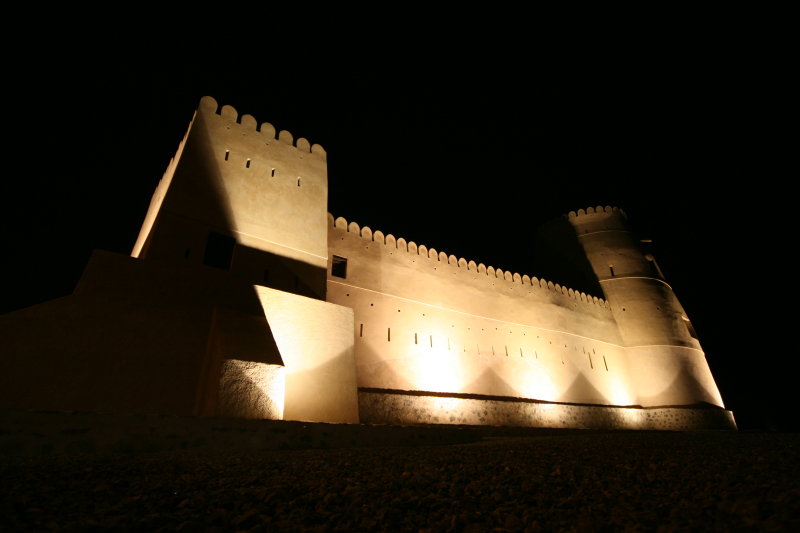
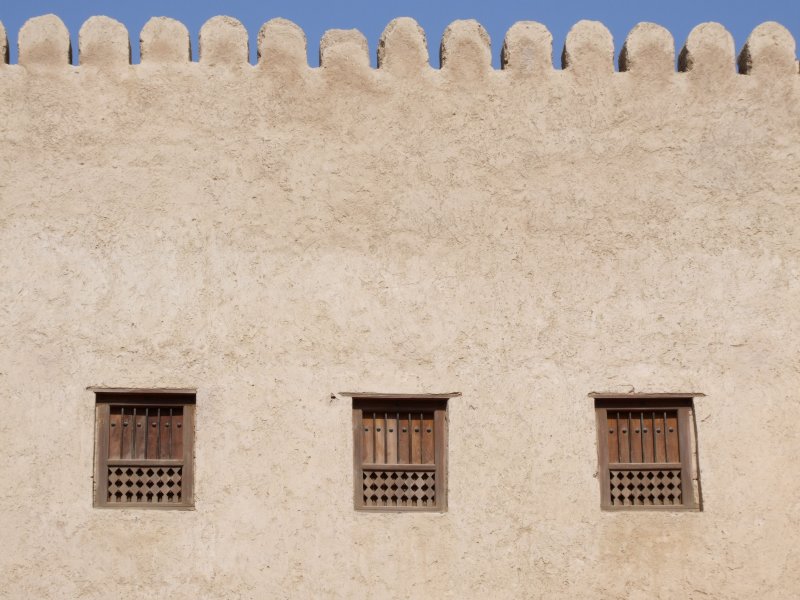
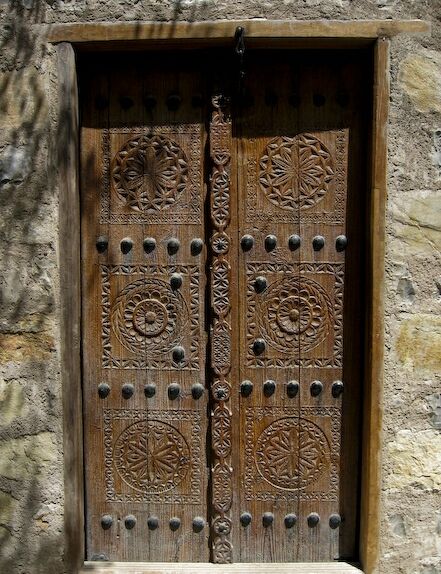
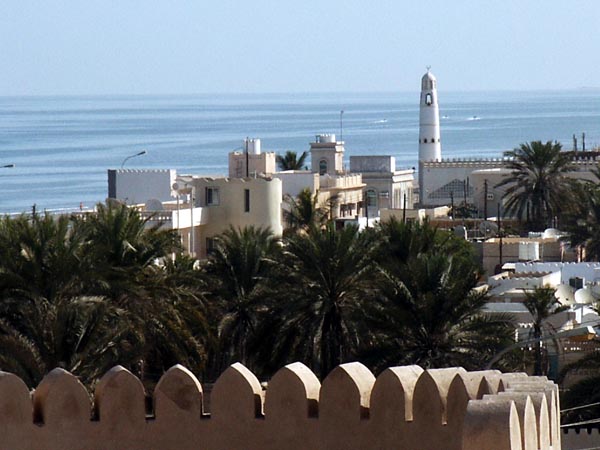
Barka Fort
Barka Fort is perhaps the most impressive of Oman's massive sand fortresses. Here an inscription records the name of Ahmad bin Said, the first imam of the Al-Bu Said dynasty, and victor of Oman's final battle with the Persians. A major landmark on Al-Batinah coast, the fort is located a few hundred meters from the shore of the Gulf of Oman, and dates back to the reign of Imam Saif bin Sultan Al-Ya'arubi. It features a unique octagonal tower with two restored watchtowers at the rear, which were once part of the defensive town wall.
Al Hazm Fort
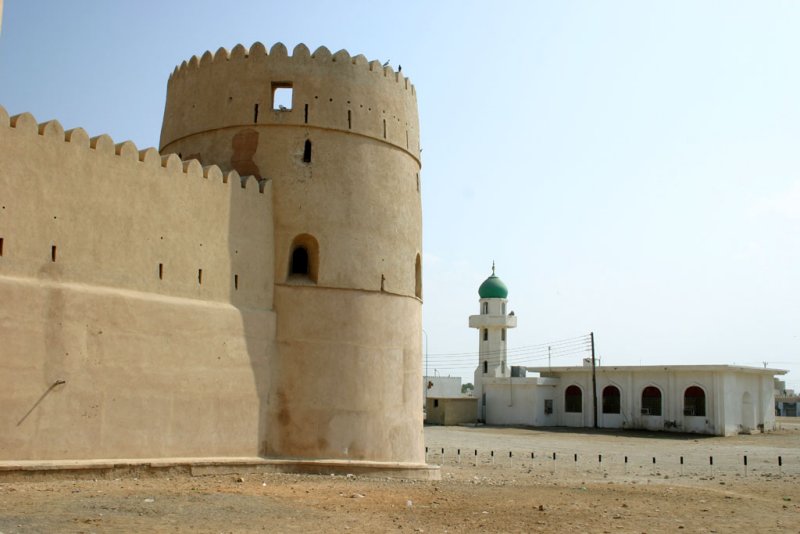
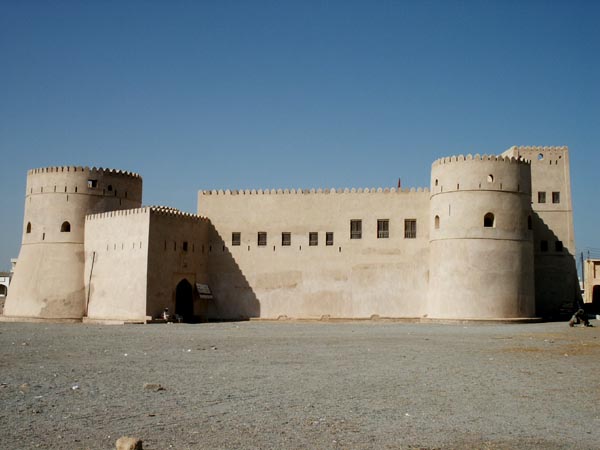
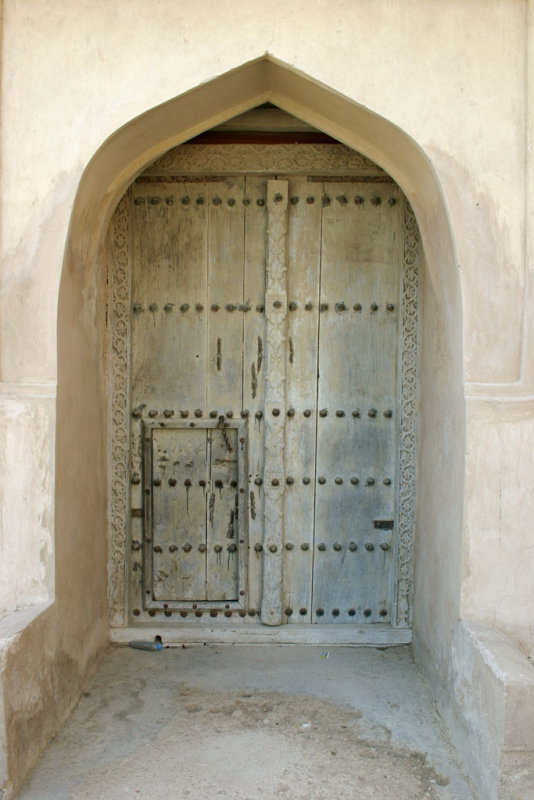
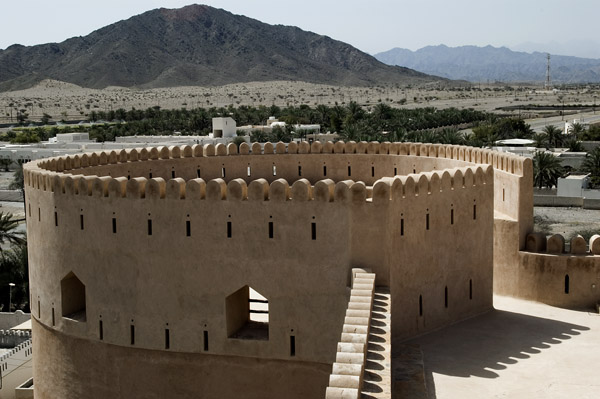
The fifth ruler of Al-Ya'aruba, Sultan bin Saif II, established his capital at Al-Hazm, in Wilayat Ar-Rustaq, Al-Batinah Region on the seaward side of the mountains. Built in 1725, his fort echoed the plan of Jabrin. The location of the fort was chosen on strategic defense grounds to guard the routes between the coastal and interior regions. It is characterised by its distinctive shape and massive construction. The fort makes full use of traditional Omani defensive features: secret escape tunnels, dungeons, and cannon towers. The central columns of its round towers feature ornate plaster work above the bronze Portuguese cannons brought from Al-Mirani Castle in the 19th century. Al-Hazm Fort was restored in 1996. Jabrin Fort:
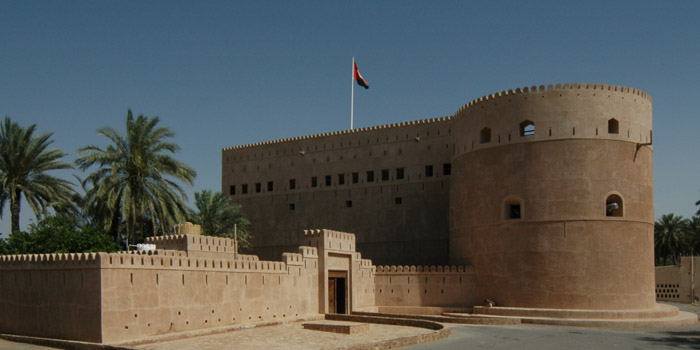
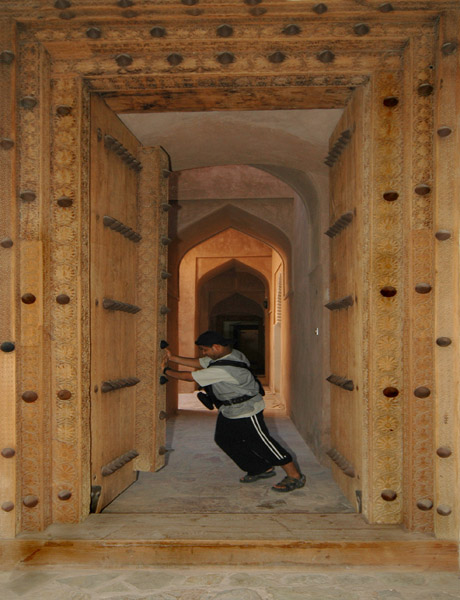
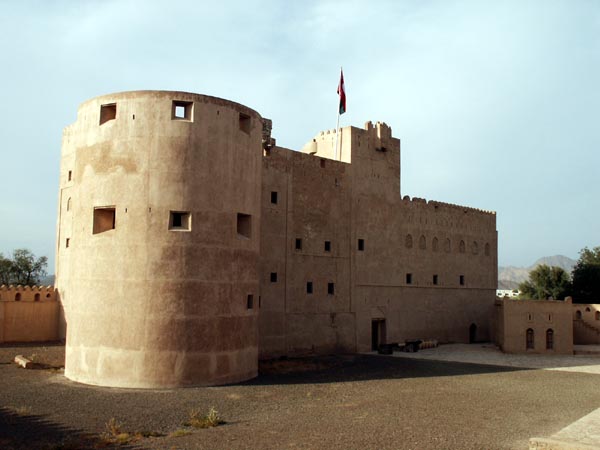
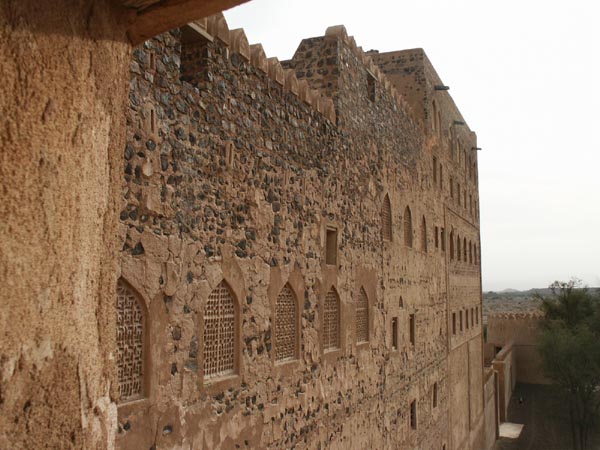
Jabrin Fort
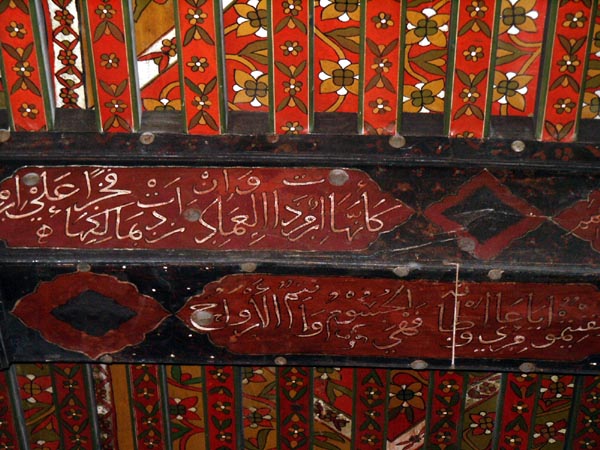
Situated in the town of Jabrin in Wilayat Bahla, Ad-Dakhliyah Region, the fort displays a remarkable blend of defensive architecture and sophisticated embellishment. Consisting of three floors and 55 rooms, this exquisite palace was constructed circa 1670 during the peaceful and prosperous Al-Ya'aruba dynasty. About a quarter of a century after Nizwa Castle was constructed, Bilarab bin Sultan, son of Nizwa's builder and the third imam of Al-Ya'aruba, erected the splendid palace of Jabrin in the middle of a wide inland plain. According to Paolo Costa, the square layout of Jabrin palace, with its two towers at opposite corners, surpasses Nizwa by unifying its defensive and residential features. Bilarab, who was known as a benefactor to poets and scholars, endowed Jabrin with a madrasa, or school. The fort still guards the tomb of its builder, who died in 1692. Another scholar, Eugenio Galdieri writes that Jabrin shows the artistic influence of Safavid Persia in the design of its plaster grates and its general apportionment of space. The flowing patterns of its painted ceilings, such as the one in the Hall of the Sun and the Moon, echo carpet designs, and offer the finest examples of such painting in all of interior Oman. The fort was restored and furnished in 1982.
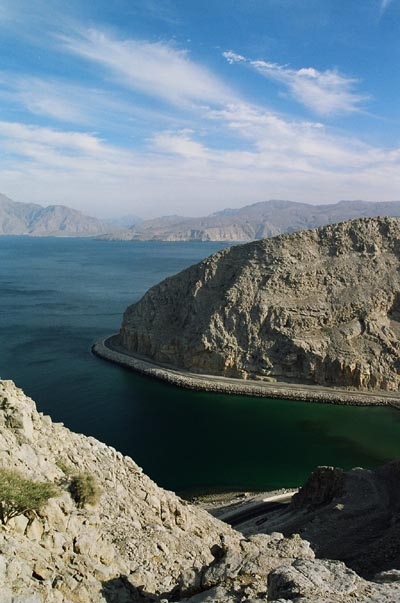
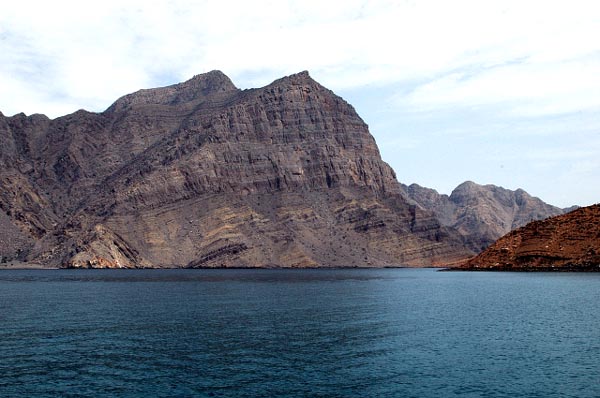
The Musandam (Arabic: مسندم) peninsula is an exclave of Oman, separated from the rest of the country by the United Arab Emirates. In the northern section of Musandam, around Kumzar, the current language is Kumzari, which is one of the south-western Iranian languages and a sub-branch of Persian. The Musandam Peninsula has an area of 1,800 square kilometers and a population of 28,727 people. Connectivity has traditionally been a problem for the region, but this has greatly improved since August 2008 with the world's fastest passenger ferry launching service between Muscat and Musandam.
Visits in Musandam
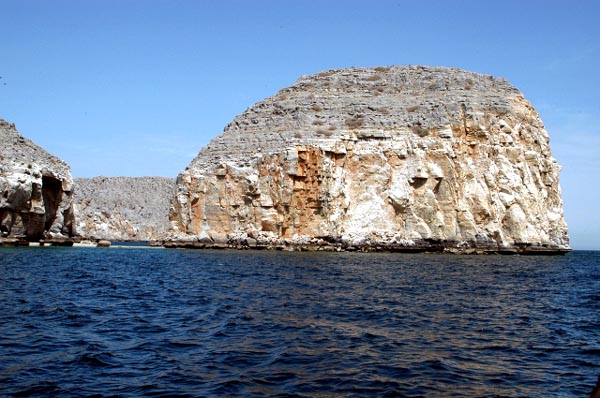
Muscat (Arabic: مسقط, transliteration: masqaṭ) is the capital and largest city of the Sultanate of Oman. It is also the seat of government and largest city in the Governorate of Muscat. As of 2008, the population of the Muscat metropolitan area was 1,090,797. The metropolitan area spans approximately 1500 km² and includes six wilayats. Known since the early 1st century CE as an important trading port between the west and the east, Muscat was ruled by various indigenous tribes as well as foreign powers such as the Persians and the Portuguese Empire at various points in its history. A regional military power in the 18th century, Muscat's influence extended as far as East Africa and Zanzibar. As an important port-town in the Gulf of Oman, Muscat attracted foreign tradesmen and settlers such as the Persians, the Balochis and Gujaratis. Since the ascension of Qaboos bin Said as Sultan of Oman in 1970, Muscat has experienced rapid infrastructural development that has led to the growth of a vibrant economy and a multi-ethnic society. The rocky Western Al Hajar Mountains dominate the landscape of Muscat. The city lies on the Arabian Sea along the Gulf of Oman and is in the proximity of the strategic Straits of Hormuz. Low-lying white buildings typify most of Muscat's urban landscape, while the port-district of Muttrah, with its corniche and harbour, form the north-eastern periphery of the city. Muscat's economy is dominated by trade, petroleum and porting.
Visits in Muscat
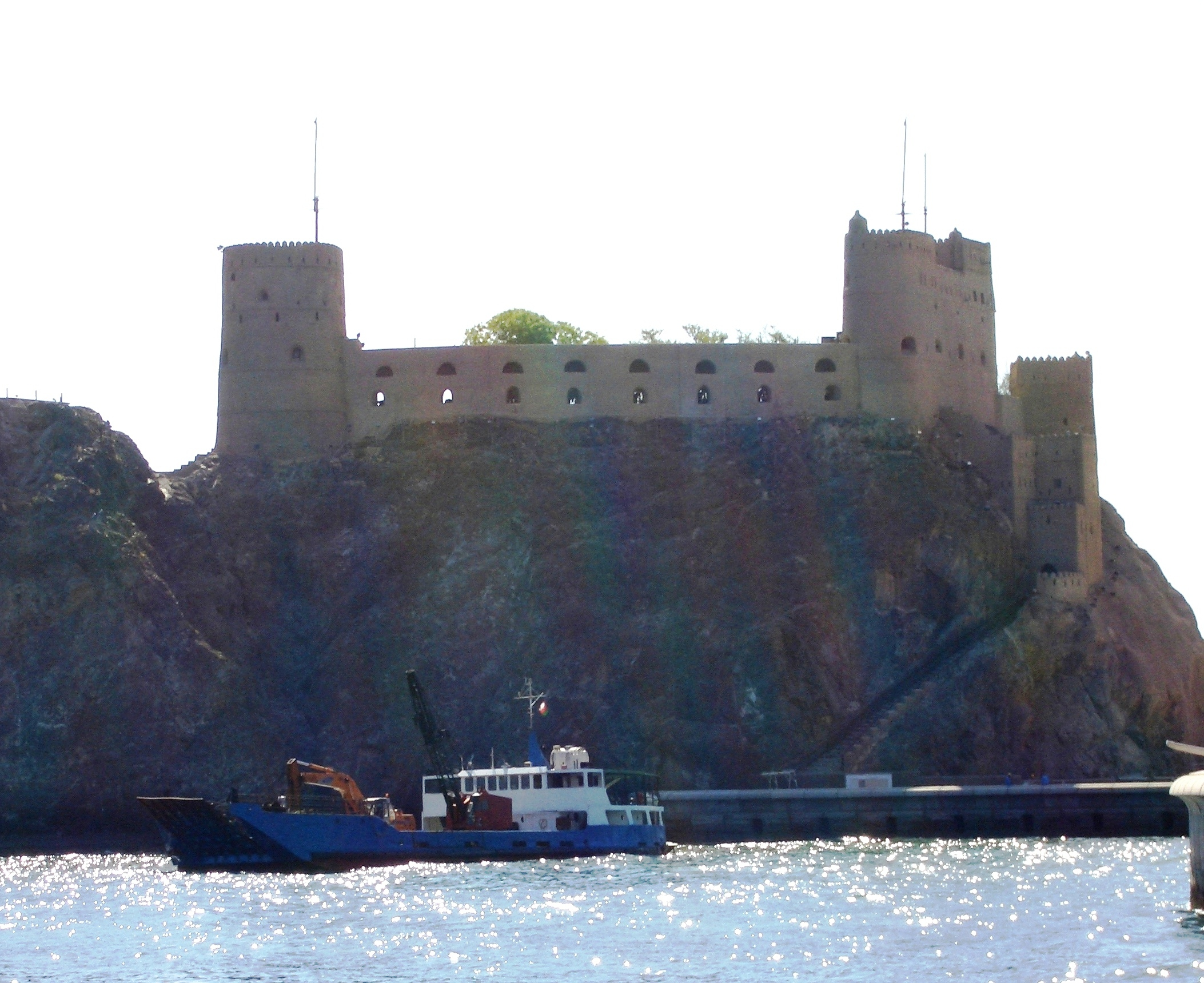
Al-Jalali Castle
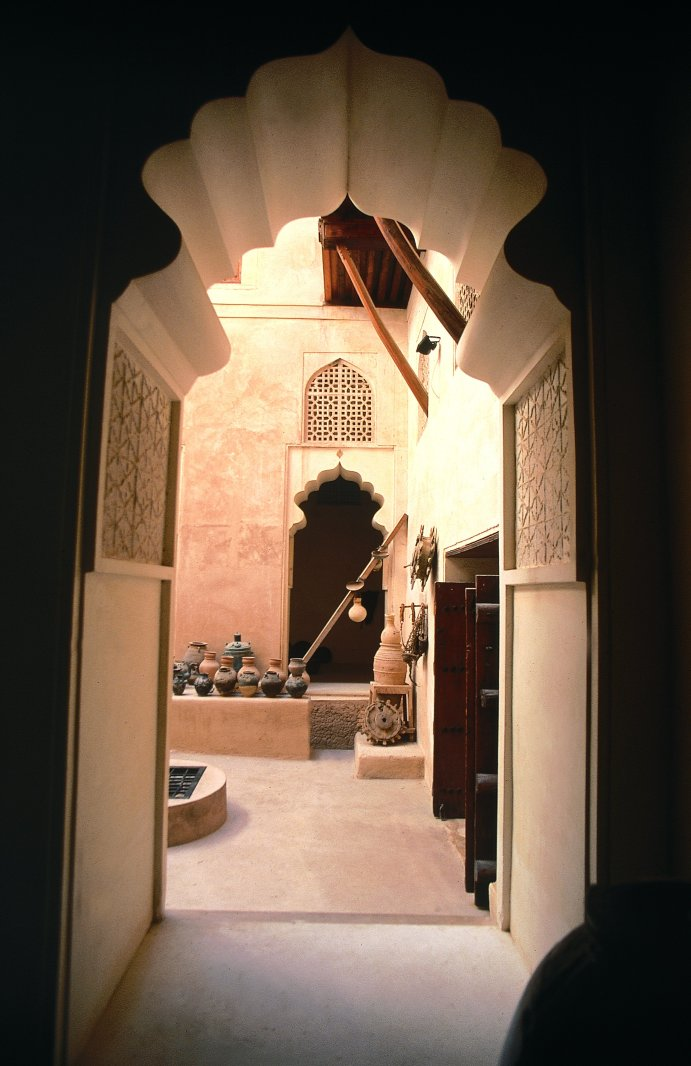
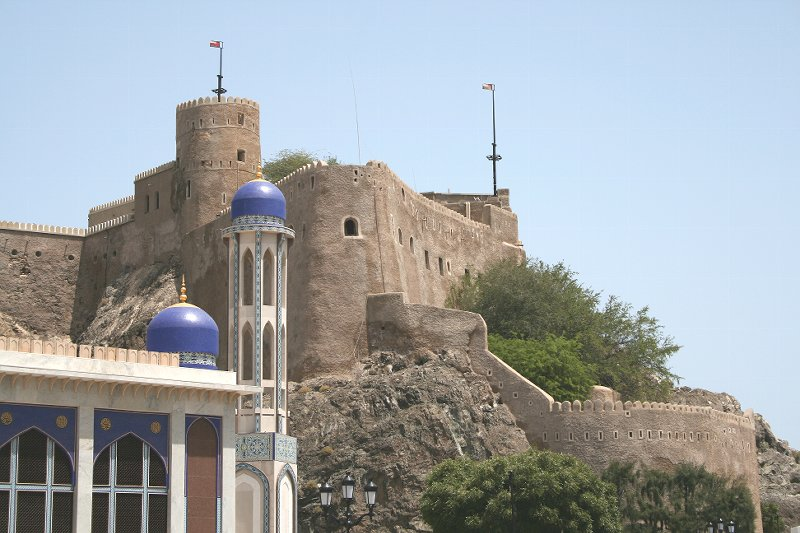
Al-Jalali Fort perches on top of a rock on the eastern side of the old harbor of Muscat, overlooking the majestic Al-Alam Palace. Its name is thought to be derived from the Persian name Jalal. The fort was originally built in the early 16th century by the Portuguese captain Melkior Calaca, with more fortifications and towers being added towards the latter half of the century. Upon its capture by Omani forces in 1650, it was gradually strengthened and rebuilt into its present form. Al-Jalali is fortified by two towers, connected by a long wall with cannon slits. Rainwater was collected in a reservoir. Apart from access over a small bridge and stairway next to one of its towers, the fort is entirely cut off and cannot be reached by land. The fort and its twin Al-Mirani, in conjunction with the formidable defenses of Mutt rah fort and a number of other fortified structures and watchtowers along the rocky ridges of the bay, made Muscat virtually impregnable. They collectively supplemented the old city's natural defenses, the massed rows of rocky hills surrounding the bay. The fort stands as a proud monument to a bygone era of Omani heroism and martial prowess, a life-size museum piece in its original and authentic setting.
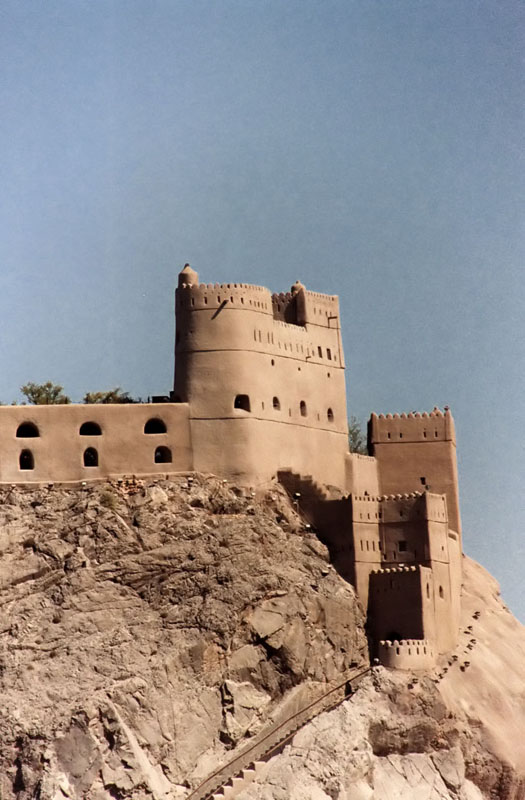
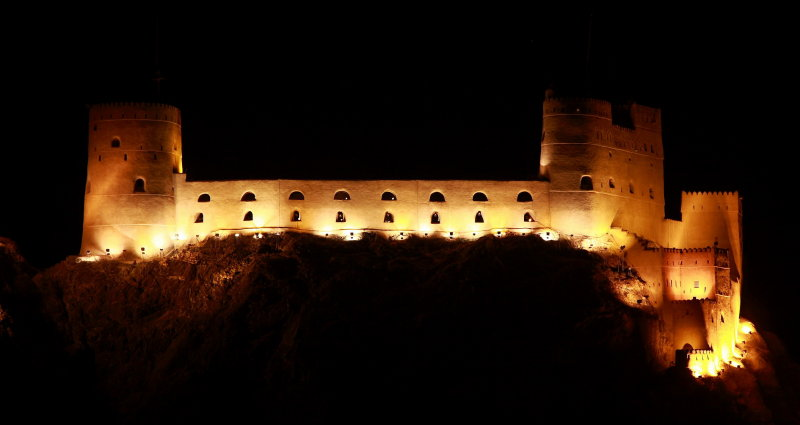
Al-Mirani Castle
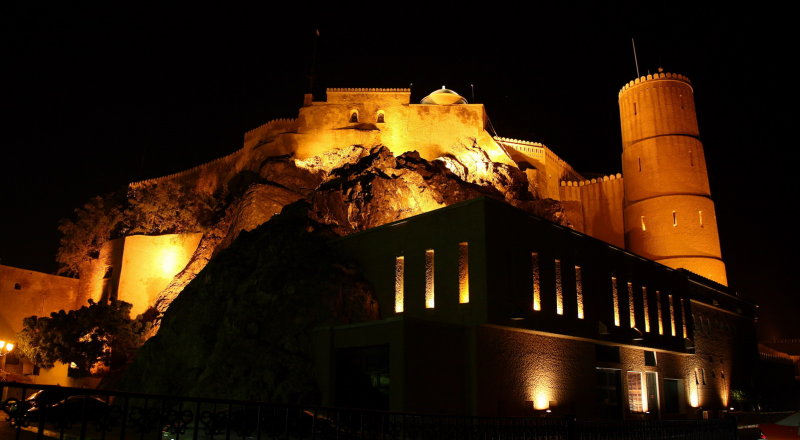
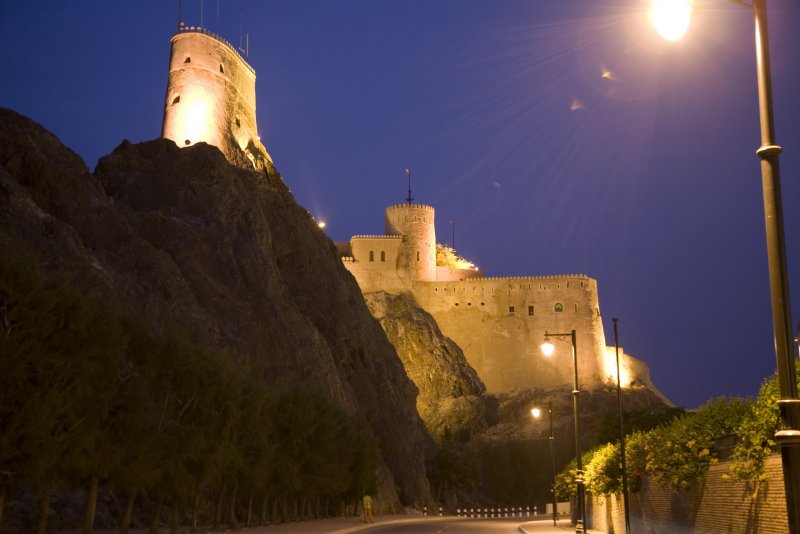
The impregnable Fort of Al-Mirani tops the western rocks of Muscat Bay, flanking Al-Alam Palace. It is thought to be named after one of its Portuguese inhabitants. The fort was originally built in the early 16th century by the Portuguese, who used it as their major headquarters during the 60 years of their occupation of Oman. Towards the latter half of the century, they added more fortifications and towers to the fort. In 1610 a dock was constructed at the base of the fortification, equipped with a low-level battering ram to repel attacks from passing ships. In 1650, Omani forces expelled the Portuguese, and gradually rebuilt and strengthened the fort into its present form. Notable features of the fort are its oval-shaped artillery tower, soaring upwards to a height of 26.5 m from its rocky base at sea level, and the complex and confusing network of passages in the interior. The fort and its twin Al-Jalali, in conjunction with the formidable defenses of Muttrah fort and a number of other fortified structures and watchtowers along the rocky ridges of the bay, made Muscat virtually impregnable. They collectively supplemented the old city's natural defenses, the massed rows of rocky hills surrounding the bay.
Nakhal Castle
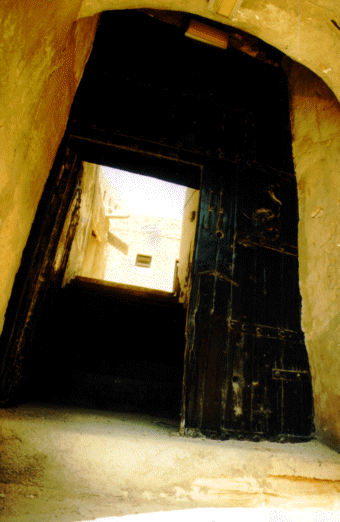
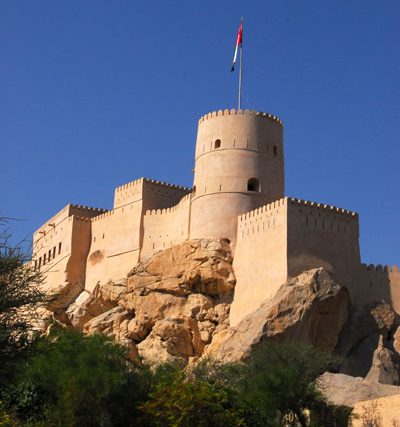
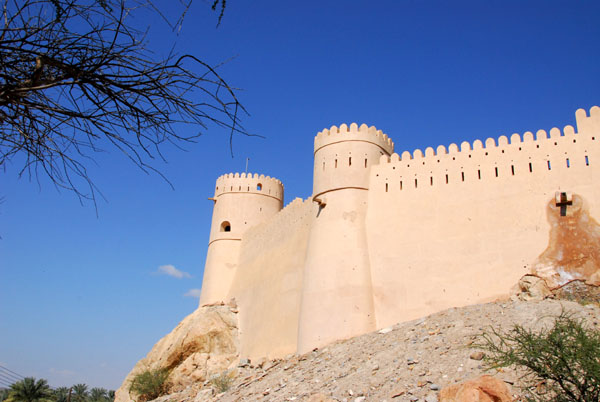
Located in Al-Batina Region, Nakhl Castle sits on top of a 200-metre rocky prominence in the foothills of the Western Hajar Mountains, overlooking the extensive palm groves which surround Nakhl. The castle is believed to date from the pre-Islamic era, and underwent significant renovation in the 9th and 16th centuries during the reigns of Bani Kharous and the Al-Ya'aruba imams respectively. The gate, fence and towers were built during the reign of Sultan Said bin Sultan Al-Bu Saidi in 1834.In 1990, the Castle was restored using traditional building materials and period furnishings. Of the various towers, Al-Wasat Tower (Central Tower) is the most prominent. The castle also features a bridge and contains many rooms for various uses, including the quarters of the Wali, a guard's shelter and soldiers’ rooms.
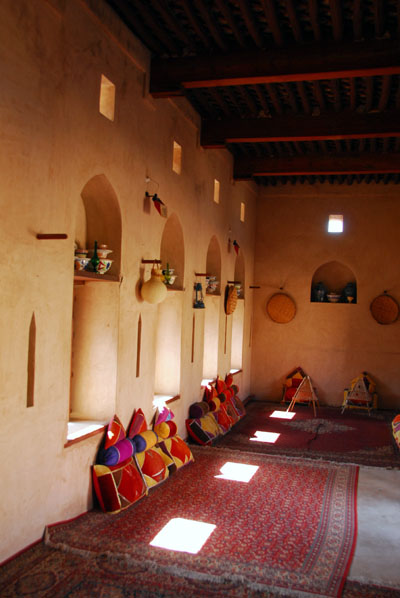
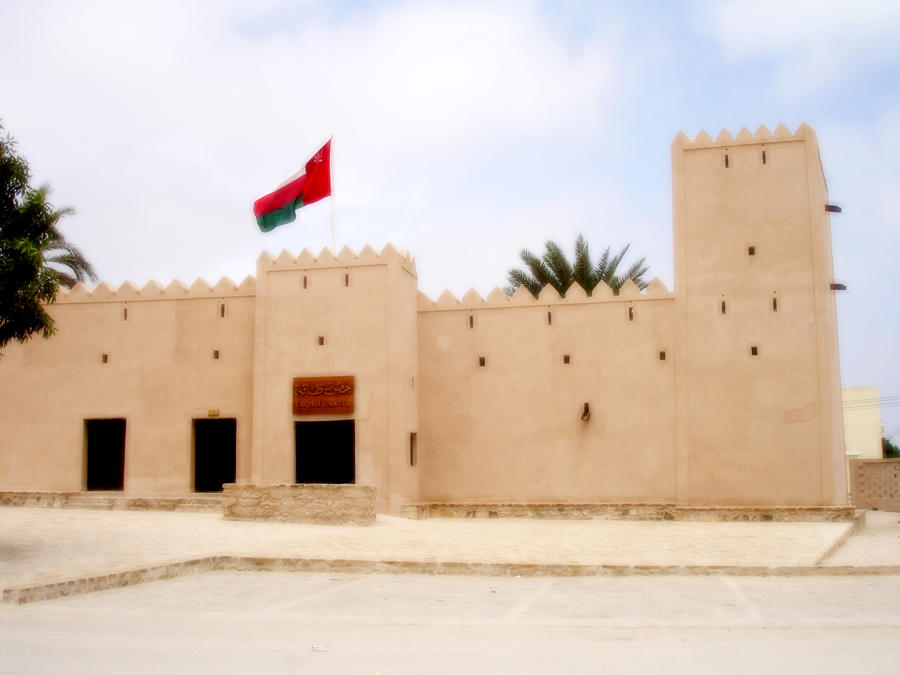
Taqah Fort
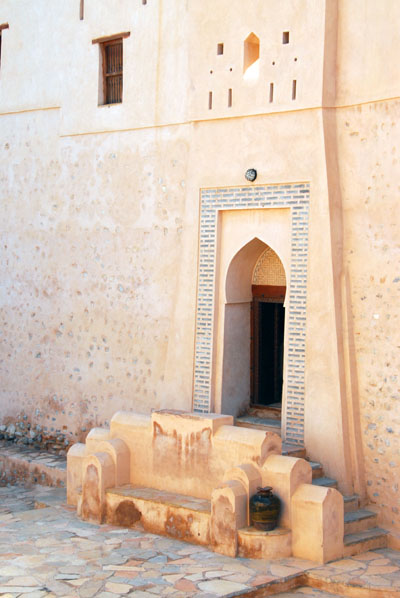
Nestled in the heart of Taqah, a coastal town in Dhofar which is famed for its pottery, silverwork and other artisanat, it is no wonder that Taqah Fort has an artistry of its own. The numerous shuttered windows of the fort are particularly distinctive, being fitted with latticed wooden screens and keyhole-shaped arches.
Book Now
Horizon Expeditions Invites You To Leave The Ordinary Behind And Embrace The Extraordinary. Ready To Explore The Unseen And Conquer The Untamed? Contact Us Today To Join An Expedition Not For The Weak-Hearted, But For Those Seeking Surreal Transformations Through Travel.